


How Predictive Maintenance Helps Reduce Downtime in Manufacturing
By the time the night shift supervisor understood what had happened, two hours of production were already lost. The emergency mechanic charged double. The spare part wasn’t available, forcing a three-hour drive at dawn. A customer order slipped from Thursday to Monday, and the machine stayed offline for 36 hours.
The irony? The warning signs were there all along. Vibration readings had been rising for weeks. The machine was sending signals. Nobody noticed.
This happens on factory floors every day. The question isn’t if equipment will fail. It will. The question is whether you discover it at 2 AM during a breakdown or during a scheduled maintenance window.
That’s the difference between reactive and predictive maintenance. And the cost gap between the two is far bigger than most plant managers realize.
The Three Maintenance Approaches
To understand predictive maintenance, it helps to compare it with the methods most factories use today.
Reactive maintenance
It means fixing things after they break. Although the initial costs are low, emergency fixes end up being pricier because of overtime wages, rushed part ordering, and lost productivity. Despite progress in making stuff, lots of places stick to this last-minute approach.
Preventive maintenance
Equipment gets checked at set times no matter its actual state. This cuts down on surprises, yet it could result in upkeep that’s not needed and might still miss issues that crop up before the next check-in.
Predictive maintenance
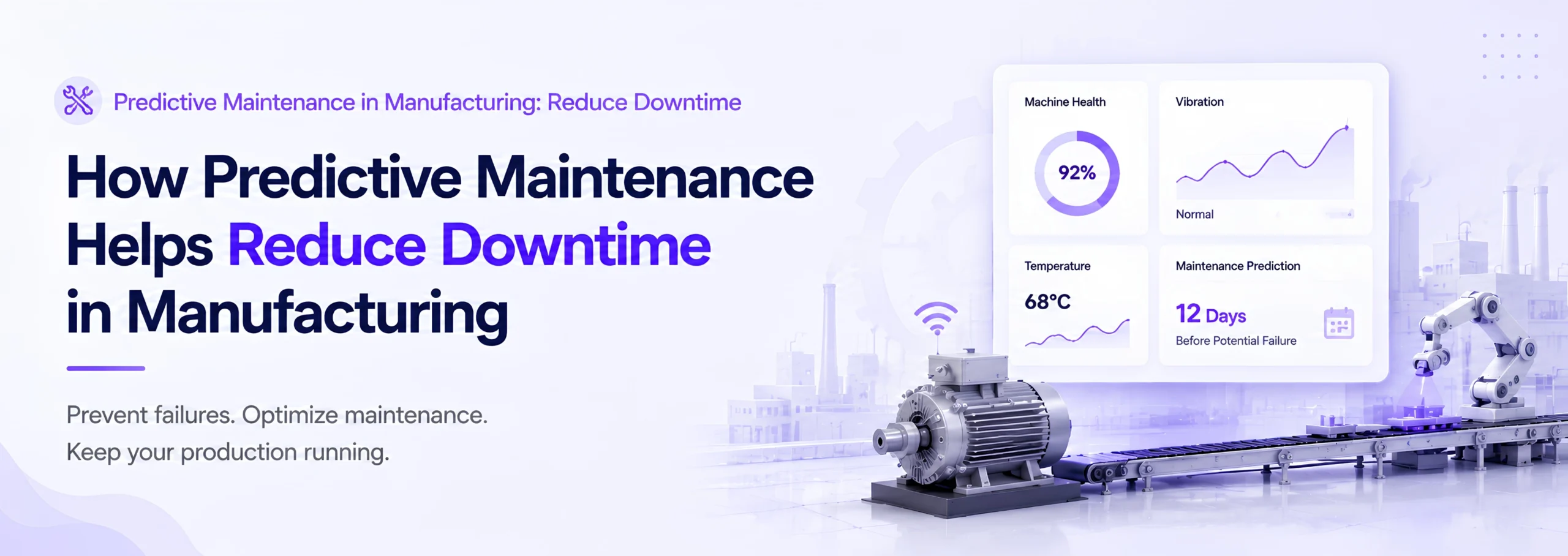
It looks at how machines are faring right now using sensors for vibrations, heat, motor strength, and oil health. When an AI spots trouble brewing, maintenance crews get notified early on and can address it without waiting for a crisis.
This strategy targets fixing glitches before they lead to production stops. Something that used to be tough to set up is getting easier by the day.
What the Data Actually Shows
Unplanned downtime costs manufacturers billions every year. For some automotive production lines, a single hour of downtime can cost over $2 million. Across industries, downtime costs average around $260,000 per hour, and many facilities lose hundreds of production hours annually.
Predictive maintenance significantly reduces these losses. Companies that adopt it typically cut maintenance costs by 18–25% and reduce unplanned downtime by 30–50%. Mature programs often achieve even greater improvements.
Repair costs also drop sharply. Fixing a problem before failure can cost 4 to 5 times less than dealing with an emergency breakdown.
The financial return is equally compelling. Most organizations that implement predictive maintenance report positive ROI, with many recovering their investment within the first year and achieving substantial long-term returns.
Reactive vs Preventive vs Predictive
| Reactive | Preventive | Predictive | |
| Trigger for action | Equipment failure | Fixed schedule | Real-time sensor data |
| Downtime type | Unplanned, unpredictable | Planned, but over-frequent | Planned, minimal |
| Repair cost | 3–10× emergency premium | Standard | Pre-failure, lowest cost |
| Parts usage | Emergency procurement | Often replaced early | Used near the end of life |
| Equipment lifespan | Reduced (run to failure) | Moderate improvement | Extended by 20–40% |
| Suitability | Low-criticality assets only | Most standard equipment | High-value, production-critical machines |
| Data required | None | Basic usage logs | Continuous sensor streams |
A useful benchmark from world-class manufacturing plants: they target less than 20% reactive maintenance, 50–60% preventive, and 25–35% predictive across their asset portfolio. Most facilities today are essentially the inverse of that.
How It Works in Practice: The Mechanics of Prediction
Sensors on the key gear constantly check stuff like vibration, temperature, motor current, and pressure. This information gets beamed to either a cloud or edge platform for analysis.
First up, there are checks against preset limits to spot weird readings. Next, machine learning steps in to pick out trends that hint at upcoming hardware mishaps. Instead of zeroing in on single measurements, the system looks at the whole picture, spotting issues several days or even weeks before anything actually goes wrong.
If the software detects risk, it fires off alerts and can auto-create work orders. Then, the fix can be scheduled during maintenance windows, not while everything’s humming along. This way, we dodge unexpected malfunctions and keep the workflow smooth.
Why Small and Mid-Sized Manufacturers Have Been Left Behind
Most predictive maintenance success stories involve big manufacturers with tech-savvy staff and deep pockets. For many Indian small and medium-sized enterprises (SMEs), this approach is too pricey and complicated. Traditionally, deploying such systems demands a lot of cash for hardware, software, integration, and training employees, making it hard for small factories to jump in.
But things are shifting. New AI-powered platforms are cheaper, quicker to set up, and work with current machines, even older ones. So, manufacturers can get valuable maintenance insights within weeks, not months. As these barriers drop, predictive maintenance becomes realistic for businesses that can really benefit from cutting downtime costs.
Getting Started: A Practical Sequence for Manufacturers
Start with the machines that matter most; don’t go after every single one at first. Focus on the 3–5 assets that, if they fail, will hit you where it hurts – massive downtime, huge production losses, sky-high repair costs. This way, you see quick results and keep things simple as you get started.
Next, make sure to set up a baseline correctly. For predictive maintenance to really shine, the system needs to know what ‘normal’ is for your equipment. Gather data from your sensors for about a month before taking action on anything. This lets the system recognize weird stuff early on and helps avoid false alarms.
Having an alert isn’t helpful unless you do something with it, right? Make clear who’s in charge of getting those notifications, who signs off on maintenance work, and the whole process from creating to tracking repair requests.
Lastly, keep tabs on downtime hours and emergency fix costs both pre- and post-implementation. Compare those numbers to understand the true return on investment and the overall effect on your business.
Where Dhumi Closes the Gap
Dhumi was built around a simple observation: manufacturers that can benefit most from predictive maintenance are often the least served by existing solutions. The challenge is not awareness. Most plant managers understand the value of preventing downtime. The challenge is finding a solution that is affordable, practical, and quick to implement.
Dhumi tackles this through three main abilities.
First off, many Indian factories still rely on outdated machines without modern connectivity. But Dhumi installs IoT sensors that don’t need big changes or new equipment. This way, the system can monitor both old and new machines from one place.
Secondly, setting up predictive maintenance can take forever sometimes. Yet, Dhumi cuts down that time using a low-code approach. Factories get to watch their assets and find results much quicker, within a few weeks, instead of waiting months.
Lastly, maintenance warnings are only helpful if acted upon. So, Dhumi links those alerts straight to workflow tasks. This covers creating work orders, assigning techs, checking parts, and tracking fixes. With all the legwork done, it ensures speedy issue handling.
All this results in solid enterprise maintenance that skips the usual headache and extra cost of large-scale setups.
More than saving downtime, predicting maintenance bolsters credibility too. Having a paper trail for inspections and gear health during audits and certifications makes factories seem trustworthy. This lets manufacturers make stronger business ties and grow in fresh markets.