Every retailer knows a customer who bought three times and then never came back. You never found out why. The benefits of CRM begin with answering that question. Good CRM Solutions turn scattered customer data into clear action. In this guide, you will learn the main benefits of CRM, how a CRM software company can support your growth, and what to check before you buy. Everything is explained in simple words, so you can use it today.
A Retail Story: How One Chain Stopped Losing Its Best Customers
Meera is a fictional operations head, but her problem is very real. She manages a fashion chain with 25 stores. Sales looked steady, yet loyal shoppers were quietly disappearing. Customer details lived in billing software, a few Excel sheets and the memory of store staff.
She asked a CRM software company for a demo. Within weeks, every purchase, return and complaint sat in one place. The first report surprised her: many repeat buyers had not visited for months.
Her team sent a simple "we miss you" offer based on each shopper's favorite category. Store staff could now see past purchases on a tablet. Complaints stopped slipping through the cracks. Three months later, her board asked one question: why did we wait so long?
That is one of the biggest benefits of CRM for any retail business.
What Is CRM for Retail Business?
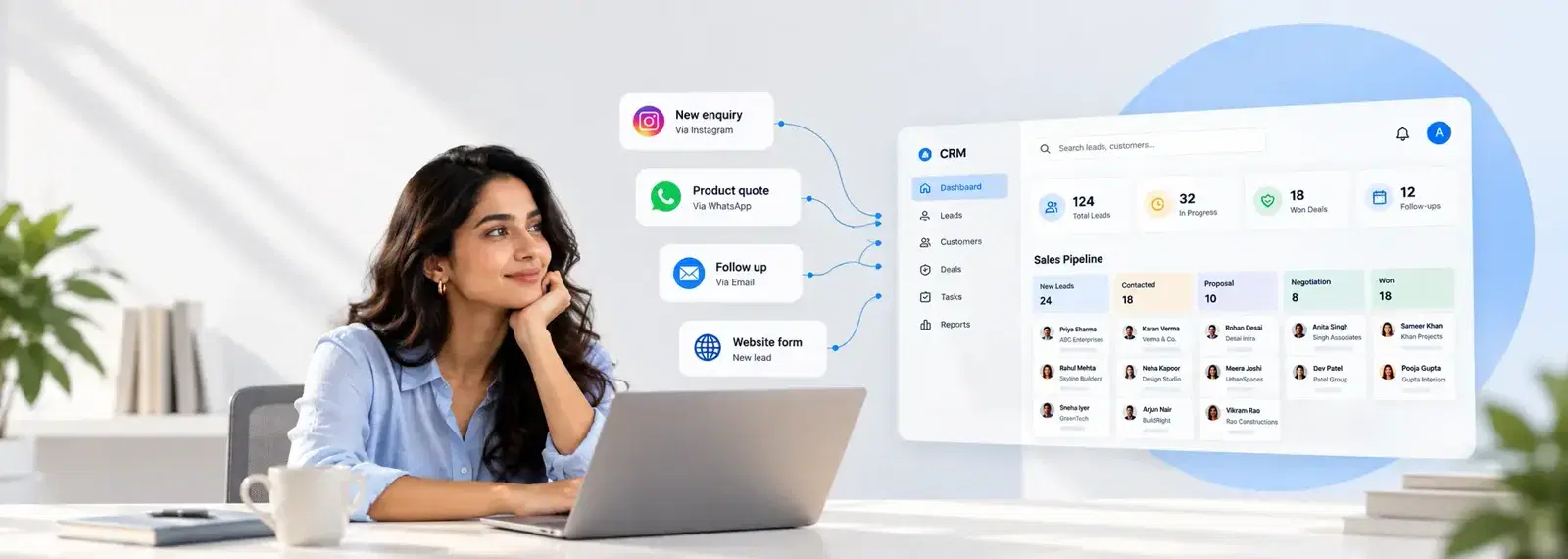
CRM stands for customer relationship management. A CRM is software that stores customer data, tracks every interaction and helps your team act on it. CRM for Retail Business goes one step further. It connects stores, online orders, loyalty programs and marketing in one system.
Good retail CRM Solutions build a complete picture of each shopper. According to CustomerThink, a 360 degree consumer view needs five types of data: demographic, transactional, behavioral, environmental and social (CustomerThink).
10 Benefits of CRM Software for Retail Businesses
1. One Clear View of Every Customer
Without a CRM, customer data sits in many places. A CRM brings it together. You see what each person bought, when they bought it and how they like to be contacted. Your team stops guessing and starts making decisions with facts.
2. Personal Offers That Feel Personal
Shoppers now expect you to know them. McKinsey reports that 71 percent of consumers expect personalized interactions, and 76 percent get frustrated when it does not happen (McKinsey & Company). A CRM lets you group customers by habits and send the right message to the right group.
Simple Example
A shopper who buys running shoes every six months gets a reminder and a small offer in month five. No guesswork needed.
3. Better Customer Retention
Keeping a customer is easier than finding a new one. Research by Frederick Reichheld of Bain & Company is widely quoted, and it says that a 5 percent rise in retention can lift profits by 25 to 95 percent (CIO). That number comes from a model, so treat it as a strong direction and not a promise. Still, the lesson is clear: loyal customers are valuable. A CRM shows you who is about to leave, so you can act early.
4. Smarter Marketing Automation
A CRM can send birthday wishes, restock alerts and thank you emails without manual work. Your marketing team saves hours every week. Campaigns also reach people at the right time, which improves open rates and sales.
5. Faster and Better Customer Service
When a customer calls, your agent sees the full history on one screen. There is no need to ask the same questions again. Complaints get tracked until they are closed, so nothing is forgotten when a staff member is on leave.
6. Stronger Store Teams
Salesforce shares a telling number: 44 percent of customers feel they know more about a product than the store associate (Salesforce). A CRM fixes this gap. Staff can check past purchases, preferences and stock levels while they talk to the customer. This makes every store visit more helpful.
7. Better Inventory and Demand Planning
CRM data shows what customers buy and how often. You can plan stock for each store with more confidence. This means fewer empty shelves for fast sellers and less money locked in slow items.
8. Loyalty Programs That Actually Work
Points and rewards only work when they are tracked well. A CRM manages tiers, points and vouchers in one place. You can also reward your best customers with early access to sales. Shoppers feel valued, and they return more often.
9. Accurate Reports and Forecasts
Spreadsheets are slow and often wrong. A CRM gives you live dashboards for sales, customer groups and campaign results. Salesforce data, shared by Nutshell, says CRM tools can improve sales forecast accuracy by up to 42 percent (Nutshell). Better forecasts mean better budgets.
10. Strong Return on Investment
Nucleus Research found an average return of $8.71 for every dollar spent on CRM, as reported by Nutshell (Nutshell). Results depend on how well your team uses the tool. Most businesses see early gains in data quality within a few months, and full returns often take about a year (Nutshell).
How to Choose a CRM Software Company for Your Retail Business
The tool matters, but the partner matters just as much. Use these checks before you sign.
What to Look for in a CRM Software Company
Retail Experience
Choose a company that understands stores, online sales and loyalty programs. Retail has special needs, such as returns, seasonal peaks and many locations.
Easy to Use
If your store staff find it hard, they will not use it. Ask for a hands on demo with your own team present.
Connects With Your Tools
Your CRM should link with your point of sale system, website and email tools. Otherwise, you will still copy data by hand.
Strong CRM Support
Good CRM support means quick answers, training for your staff and help during busy seasons. Ask about support hours, response times and onboarding. A good CRM software company stays with you after the sale, because your results depend on how well your team uses the system.
A Simple Rollout Plan
- 1Start with one clear goal, such as reducing lost customers.
- 2Clean your existing customer data before you move it.
- 3Train store teams in short sessions.
- 4Review results every month and adjust.
Final Thoughts
The benefits of CRM are simple to see. You know your customers better, serve them faster and sell more with less effort. The right CRM Solutions turn scattered data into daily action, just as they did for Meera and her stores. Choose a CRM software company that knows retail, offers dependable CRM support and treats your success as its own.
Ready to enjoy the benefits of CRM? Book a demo and see how CRM for retail business can fit your stores.