
Ask five founders in Bengaluru what an AI agent is and you will get five answers. Some mean a chatbot. Some mean a script with a language model attached. A few mean software that reads an incoming order, checks stock, raises a purchase request and pings a human only when something looks wrong. That last group is describing agentic AI, and it is why agentic AI services in Bengaluru now sit on so many technology roadmaps.
This guide explains what these services include, where they pay off for SMBs and manufacturers, and how to choose an AI agent development company without paying for hype.
What agentic AI services actually include
Agentic AI describes systems that plan, decide and act across several steps to reach a goal, using your existing business tools along the way. A chatbot answers a question. An agent finishes a task.
A capable provider of agentic AI solutions usually covers five things:
- Use case discovery. Finding workflows where autonomy saves real time, and ruling out the ones that do not need it.
- Agent design. Defining the goal, the tools the agent can use, what it remembers and what it must never do.
- Integration. Connecting agents to your ERP, CRM, email, WhatsApp and accounting software.
- Guardrails. Approval steps, access limits, audit logs and a way to roll back.
- Monitoring. Tracking accuracy, cost and failures after launch.
The last three decide whether a project survives contact with real operations.
Why Bengaluru is a natural base for AI agent work
The city has a deep pool of engineers who already build with language models, a dense network of SaaS companies and global capability centres, and industrial areas such as Peenya where manufacturers often run on spreadsheets and disconnected tools. That mix means a Bengaluru team can understand both the technology and the factory floor.
Time zone overlap with the US and Europe helps too, and so does language. Agents that handle Kannada, Hindi, Tamil, Telugu and English conversations are far more useful to local customers and staff than English only tools.
Where AI agents deliver value
Manufacturing and operations
An agent can watch production entries, flag orders running late, draft purchase requests when raw material runs low and follow up with vendors. Planners stop chasing data and start making decisions.
Sales and lead management
Agents can qualify inbound enquiries, enrich them with company details, send the first follow up on email or WhatsApp, update the CRM and route serious buyers to a salesperson.
Finance and back office
Invoice matching, payment reminders and reconciliation drafts are repetitive and rule heavy. An agent prepares them and a person approves.
Customer support
Routine queries get resolved on the spot. Complex ones reach a human with the full history attached, so the customer never repeats themselves.
A reality check before you buy
Gartner has predicted that more than 40% of agentic AI projects will be cancelled by the end of 2027, mainly because of rising costs, unclear business value and weak risk controls. It also warned about "agent washing", where vendors rebrand chatbots and basic automation as agentic AI, and estimated that only about 130 of the thousands of vendors are genuine.
The lesson is not to avoid agents. It is to start narrow, tie each agent to a measurable outcome and keep a person in the loop until the results earn more trust.
How to choose an AI agent development company in Bengaluru
Use these questions when you shortlist providers:
- Can you show a working demo on my data? A slide deck proves nothing about how an agent behaves with your messy records.
- How do permissions and approvals work? You should be able to see what the agent can touch and where a human signs off.
- What integration experience do you have? Agents are only as useful as the systems they connect to. Ask about your ERP, CRM and accounting tools by name.
- Who owns the code, prompts and data? Confirm this in writing, and ask how personal data is handled under India's Digital Personal Data Protection Act, 2023.
- How will we measure success? Good answers use hours saved, error rates and cost per task, not vague promises of transformation.
- What happens after launch? Agents need tuning as your processes and data change.
Red flags include a vendor that cannot say what its agent will not do, promises full autonomy from week one, or cannot explain how it prices usage.
A sensible way to start
- 1Pick one workflow that eats 10 to 20 hours of staff time a week.
- 2Map the steps, the systems involved and the exceptions people currently handle by hand.
- 3Run a pilot where the agent proposes and a person approves.
- 4Measure time saved, errors and cost against the manual process.
- 5Widen the agent's authority only after the numbers hold up.
This approach keeps risk small and gives your team evidence before you commit a larger budget.
What drives the cost of agentic AI solutions
No honest provider can quote a price without understanding scope. The main drivers are the number of workflows, how many systems the agents must connect to, how much data needs cleaning first, the level of autonomy you allow, and ongoing usage costs for the underlying models. Ask for a scoped pilot with a fixed outcome rather than an open ended retainer, so you learn what the full rollout would cost before you commit.
Build custom agents or buy a ready made tool?
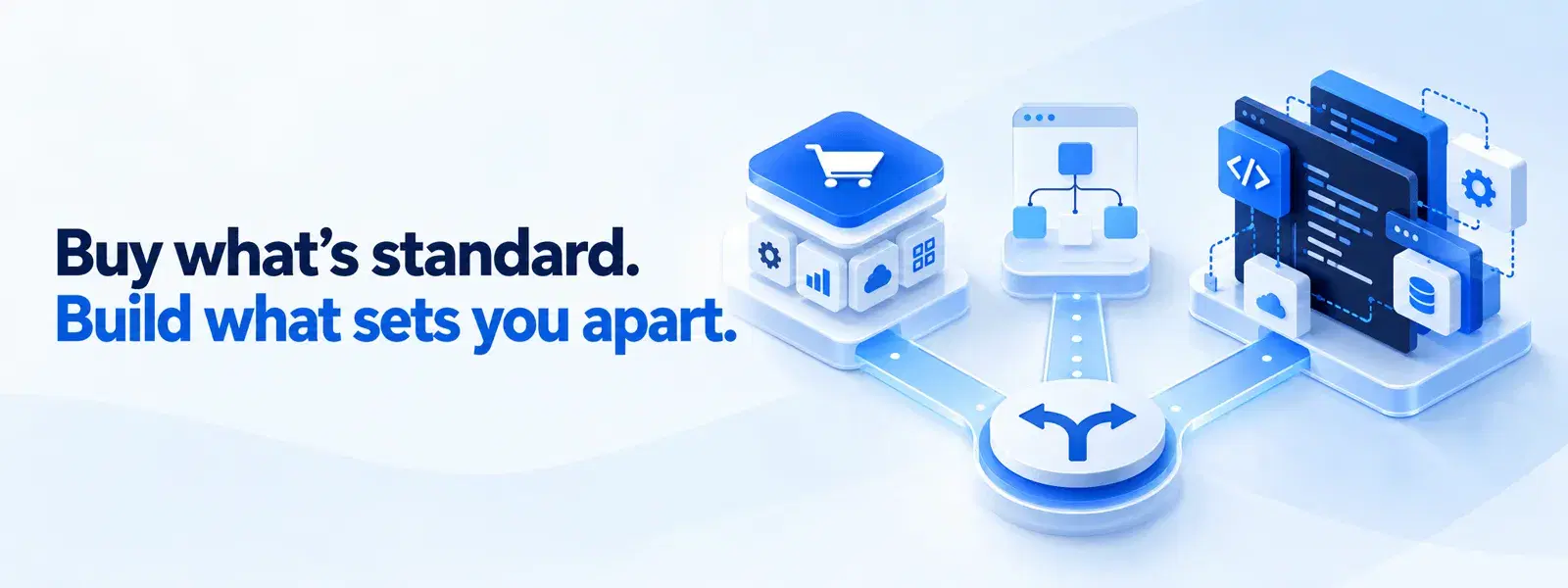
Ready made agents suit common tasks such as meeting notes or basic support replies. Custom agents make sense when the workflow touches your own ERP, CRM or production data, or when your process is what sets you apart. Many businesses end up with a mix, which is why integration skill matters more than any single tool.
Where Dhumi Technologies fits
Dhumi Technologies is a Bengaluru based, AI powered software development company. We build custom ERP, CRM and business applications for SMBs, manufacturers and growing businesses, and we add AI agents and workflow automation on top, including through Dhumi Flow. Because the agents connect to systems we also design, integration is planned from the start rather than patched in later.
If you are comparing an agentic AI company in Bangalore for a pilot, we are happy to start with a single workflow and a clear measure of success.
Next steps
Agentic AI rewards teams that begin with a specific problem, not a technology. Choose one painful workflow, set a measurable target and find an AI agent development company in Bengaluru that will show you how the agent works before you pay for scale. To explore a pilot, talk to the Dhumi team about your first use case.
Frequently asked questions
What are agentic AI services?
Agentic AI services cover the design, build and ongoing management of AI agents that can plan and complete multistep tasks using your business systems, with defined limits and human approval where needed.
How is agentic AI different from a chatbot or RPA?
A chatbot responds to questions and RPA follows fixed scripts. An AI agent works toward a goal, decides which step to take next and can handle variations that break a fixed script.
Which businesses in Bengaluru benefit most from AI agents?
Companies with repetitive, rule based work spread across several systems benefit most, including manufacturers, retail and D2C brands, SaaS firms and service businesses.
How much do agentic AI services cost in Bengaluru?
Cost depends on the number of workflows, integrations, data readiness, the autonomy allowed and model usage. The safest approach is a scoped pilot with a clear outcome, which shows the likely cost of a wider rollout.
How long does it take to build an AI agent?
A narrow pilot on one workflow can often be built in a matter of weeks, while agents spanning several systems need longer for integration, testing and approvals.
Is agentic AI safe to use with business data?
It can be, when the agent has limited access, approvals for sensitive actions, audit logs and data handling that follows India's Digital Personal Data Protection Act, 2023.
How do I choose an AI agent development company in Bengaluru?
Ask for a demo on your own data, check integration experience, confirm who owns the code and data, and agree on measurable success criteria before starting a pilot.