
Rohan runs a small B2B company in Whitefield, Bangalore that supplies machine parts to factories. Every morning his inbox holds dozens of quote requests, order updates, and invoice questions from business buyers. His team tried a chatbot and email rules, but they only worked for fixed questions. When a buyer asked for a custom quote or a changed delivery date, everything stopped and a person had to step in.
Then he tried something different. The new tool read each request, checked stock in the inventory system, prepared a quote from the approved price list, updated the order in the CRM, and called a human only when a deal was large or unusual. His sales team got their mornings back. (This is an example story to show the idea.)
That tool was an AI agent. If you keep asking "what are AI agents, and can they help my B2B business?", this guide answers it in simple words.
What Are AI Agents? A Simple Definition
An AI agent is a software program that understands a goal, plans the steps, uses tools, and takes action with very little human help. You tell it what you want done. It figures out how.
Oracle describes AI agents as software that can analyze inputs, decide the next steps, and act across business processes with minimal user intervention (Oracle documentation).
AI Agents vs Chatbots
Many people mix these up. A chatbot talks. An agent works. GigaSpaces explains that chatbots are built to interact with humans, while agents are designed to complete tasks on their own (GigaSpaces).
Think of it this way. A chatbot is a receptionist who answers questions. An agent is a team member who answers the question and then also fixes the problem.
Why AI Agents Matter for B2B Companies
B2B sales are different from selling to a single shopper. Deals are bigger, many people are involved, and the process has many steps, from the first quote to the final invoice. One slow reply can push a buyer to a competitor.
AI agents help because they work at any hour, keep your CRM and order data up to date, and handle the repeat steps in each deal. Your team then spends its time on relationships and special cases, which is where B2B deals are won.
How Do AI Agents Work?
Every agent follows a simple loop. TrueFoundry describes it as observing information, planning tasks, using tools such as APIs or databases, taking action, and improving through feedback (TrueFoundry). IONOS describes a similar cycle that starts with perception and processing, then moves to decisions and action (IONOS).
The Four Steps in Plain Words
- 1Look: The agent reads the message, email, or data it receives.
- 2Think: It decides the best next step to reach the goal.
- 3Act: It uses a tool, such as your CRM, calendar, or payment system.
- 4Learn: It checks the result and improves next time.
What Tools Mean
Tools are the apps and systems an agent can use, like your order database or email. Without tools, an agent can only talk. With tools, it can finish the job.
What Memory Means
Memory lets the agent remember past chats and results, so it does not start from zero every time.
AI Agents vs Traditional Automation
This is the question most business owners ask next, and it matters for your budget.
Traditional automation follows fixed rules you write in advance. If this happens, do that. Anthropic calls this style a workflow, where models and tools are run through predefined code paths (Anthropic, Building Effective Agents). Agents are different. The AI decides its own steps as it goes.
Where Traditional Automation Wins
Use fixed rules when the task never changes. Sending an invoice on the first of every month is a good example. It is cheap, fast, and predictable.
Where AI Agents Win
Use an agent when the path is not clear in advance. A customer complaint can go in many directions. An agent can read it, choose a tool, and adapt. Anthropic also notes that the most successful teams use simple, composable patterns rather than complex frameworks, so start small.
A Quick Way to Choose
- Same steps every time? Use traditional automation.
- Different steps each time? Use an AI agent.
- Not sure? Start with automation and add an agent where rules keep breaking.
Where Businesses Use AI Agents Today
B2B Sales and Procurement
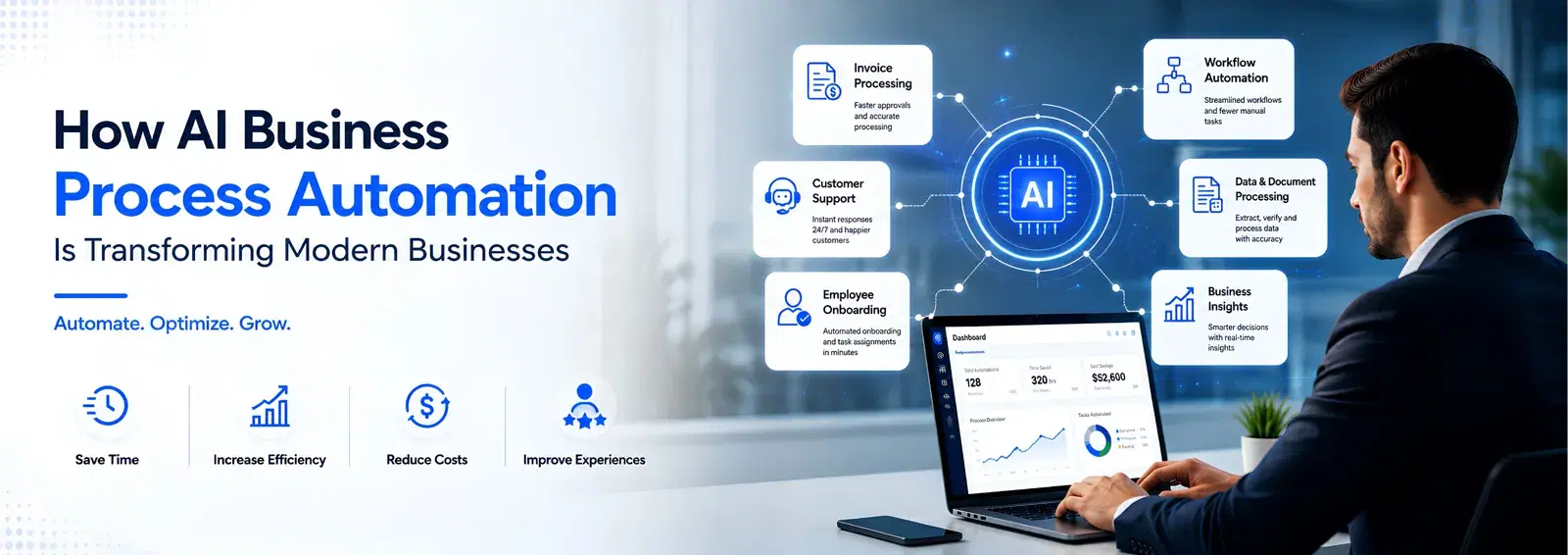
Agents can answer buyer questions, prepare quotes from approved price lists, chase unpaid invoices, and check supplier delivery dates. Your team then handles only the special deals.
Customer Support
Agents can read tickets, check order details, suggest solutions, process refunds, and pass hard cases to a person, giving customers faster answers at any hour (TrueFoundry).
Finance
Banks use agents to watch transactions, spot fraud, and alert users about suspicious activity.
Supply Chain
Agents can manage stock, reorder items, compare suppliers, and reroute shipments when there is a delay.
Healthcare
Hospitals use agents to book appointments, update patient records, and send reminders.
Benefits and Risks You Should Know
The Benefits
Agents save time, cut repeat work, and let your team focus on better tasks. The market is moving fast. Gartner predicts that by 2028, 33% of enterprise software applications will include agentic AI, up from less than 1% in 2024, and at least 15% of daily work decisions will be made autonomously through AI agents (Gartner).
The Risks
Be honest about the downsides. Built In points out that agents run on AI models that can make mistakes, and when software acts in the real world, one mistake can have big consequences (Built In).
Gartner also warns that over 40% of agentic AI projects will be cancelled by the end of 2027, and estimates that only about 130 of the thousands of agentic AI vendors are real (Gartner announcement, June 2025). The lesson is simple: pick a clear business problem first, and choose your partner carefully.
How to Start With AI Agents in 5 Steps
- 1Pick one painful task. Choose something repeated daily, like support replies or lead sorting.
- 2Write down the goal. Say clearly what a good result looks like.
- 3Connect the right tools. Give the agent safe access to only what it needs.
- 4Keep a human check. Let a person approve big actions, such as large refunds.
- 5Measure and improve. Track time saved, errors, and customer happiness for 30 days.
AI Agent Development Services: What to Look For
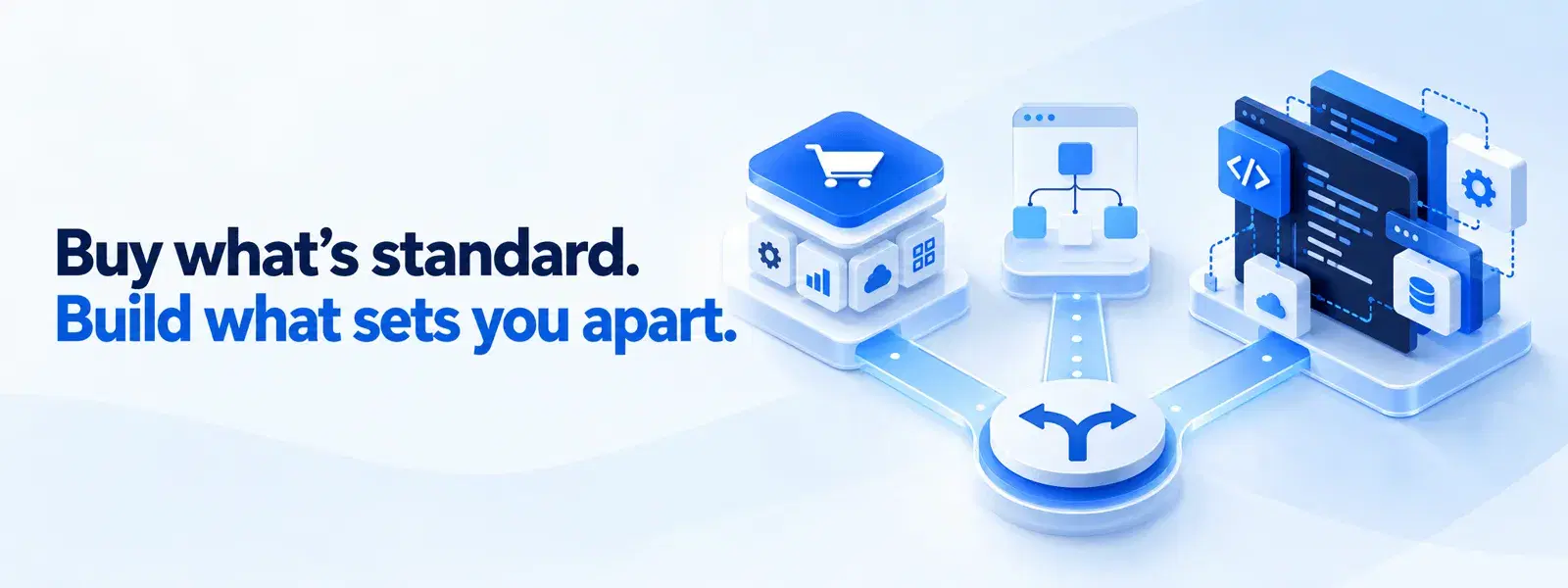
You can buy a ready made tool, or you can build an agent that fits your own process. That is where AI agent development services help. A good partner will do more than write code.
Signs of a Good Partner
- They ask about your business problem before they talk about technology.
- They show real examples, not just buzzwords.
- They explain how they handle data privacy and mistakes.
- They start with a small pilot, not a giant project.
Why Choose an AI Development Agency in Bangalore
Bangalore has one of India's largest pools of software and AI talent. Working with an AI development agency in Bangalore gives you the same time zone, easy meetings, and a team that understands Indian customers, languages, and payment systems. For many growing businesses, this makes workshops and fixes much faster than working with a distant vendor.
At Dhumi, we help B2B businesses plan, build, and launch practical AI agents, starting with one small and safe project.
Conclusion
So, what are AI agents? They are software that can plan, use tools, and finish tasks for you, much like Rohan's new order and quote helper. They work best when each case is different, and traditional automation still wins for fixed, repeat tasks.
Start small, keep a human in charge of big decisions, and choose a partner who focuses on your real problem. If you want help, talk to our team about AI agent development services and see what one small agent can do for your business.
Frequently Asked Questions
What are AI agents in simple words?
They are software helpers that can understand a goal, decide the steps, and complete tasks using your business tools.
Are AI agents the same as chatbots?
No. Chatbots mainly answer questions. Agents take action, like checking an order and sending a refund.
Do small businesses need AI agents?
Not always. If your tasks follow the same steps every time, simple automation may be enough. Agents help most when each case is different.
How long does it take to build an AI agent?
A small pilot can often be ready in a few weeks, but the time depends on your tools and data.
What is the difference between AI agents and traditional automation?
Traditional automation follows fixed rules, step by step. AI agents decide their own steps to reach a goal, so they handle cases that change each time.
How do I choose an AI development agency in Bangalore?
Look for a team that starts with your business problem, shows real examples, explains how it protects your data, and offers a small pilot before a big project.